 My last post about the differences between jewelry mallets and hammers made me want to experiment with a few things.
 For example, which hammering surface do I really prefer, the mini anvil or the 4x4 stainless block?
I also realized that although I frequently hammer things, I'm not very proficient at hammering. It's something that I do, not something that I'd say I'm good at.
So, I decided to take on a few projects that will at least improve my hammering skills.
My first project seems simple - and - well... I guess it was.
Making Hammered Wire Sticks
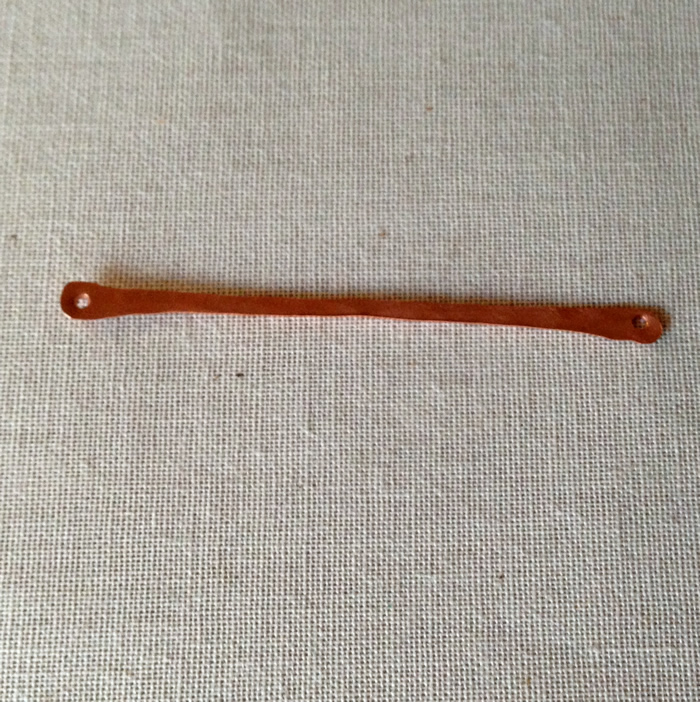
Hammered wire sticks are just what they sound like - pieces of wire 14-18g, hammered flat - sometimes flared at the end (which I call bones) sometimes shaped into a gentle curve before or after hammering.
They can be used for earrings, focals or connectors on bracelets, connected with links to make chain, or even curved into a ring shank. When I stopped to think about, I decided they are a versatile jewelry component - and therefore an important thing to know how to make.

I was trying to see if my hammering skills improved from one batch to the next. Sad to say - NOPE!
To be fair, I tried different techniques or hammering surfaces with each batch too.
The big surprise - I like hammering the wire on the mini anvil better than the flat block! It was easier to hold the wire by wrapping my fingers around the side of the anvil - and I hit my finger less - which is always a good thing!
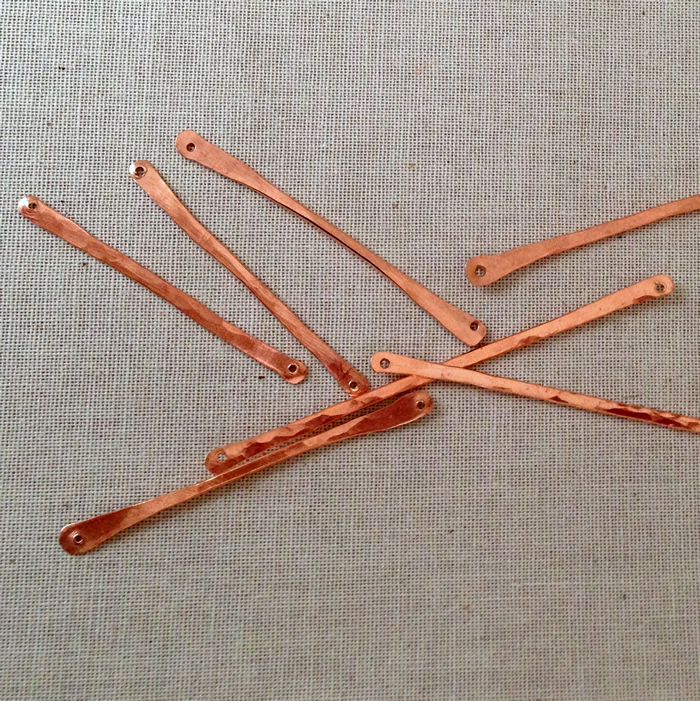
My hammered sticks didn't spend quite enough time in the tumbler - but it still shined them up a lot. This is after less than one hour of tumbling.
Making Holes in Hammered Wire
If you're wondering how I got the holes in the sticks - it's not by drilling!

I use this Pliers-Style Hand Sewing Punch that is meant to be used with leather. It has a pointy end and round dies on the bottom of various diameter. It will not go through thick metal - but I find it goes through hammered wire well.
The rotating dies on the bottom of the tool are great - because they prevent you from making too large of a hole by pressing too hard on the handles. If you use one of the small settings - no matter how hard you press - the punch will only go in so far. I got mine at Michael's with a 40% off coupon (of course!).
When you punch the hole, it leaves excess metal around the edge on the bottom. I file that flat with an emery board.
So, now I had all these gleaming sticks that I needed to make something from. Earrings are the obvious choice - so I made a ring.
Hammered Stick Ring with Focal Bead
I curved a 1.5 inch hammered wire stick around my mandrel at size 8.
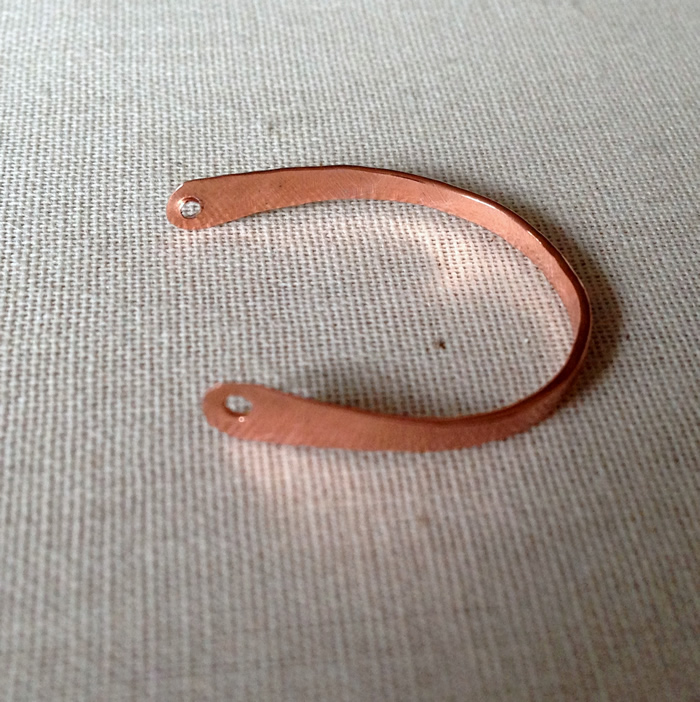
Because I didn't anneal the wire stick after hammering it, it didn't fold as neatly as soft metal does - and creased a little in the back. I used my mallet to reshape it on the ring mandrel.
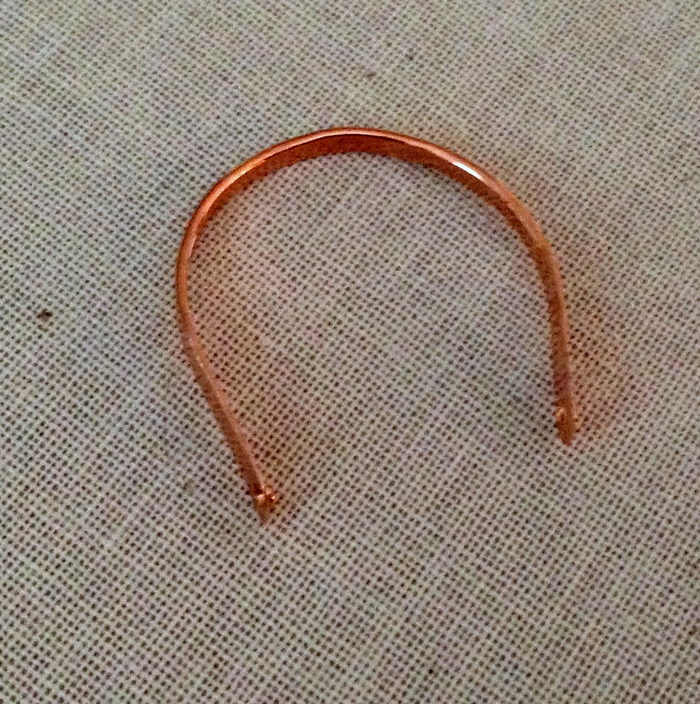
I left the wire horseshoe shaped so I can put a bead in the middle.

I would love to say I spent considerable time picking the bead for this project - but it's not true. This bead was pretty much the first one I found on the bench that I thought would work. It's a rectangular shell bead, about 8x10mm - but it is shiny and pretty!

I used 22g wire to thread the bead on the ring shank - and then wrapped it a few times on each side to secure it. I think the wrap wire was about 4 inches long.
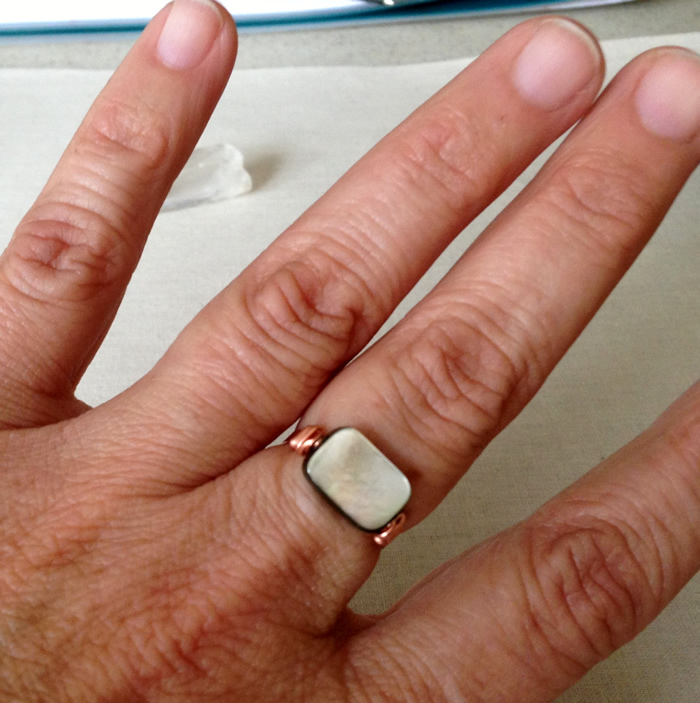
I've seen rings like this before, but the wire holding the bead has torch balled ends. I'd like to try that too.
This ring has a found a new home for now (it's actually moved to my right hand since this picture). So far it is comfortable to wear and I like the look - simple.
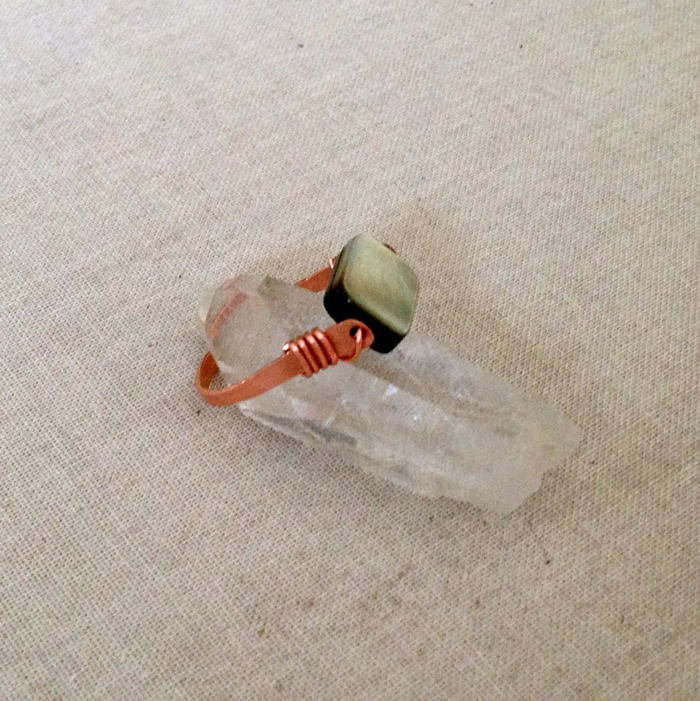
Normally, I don't like it when a bead can 'flip' over - but in the case of this bead, it is nice. One side is silver and the other side is more black - so you get two looks from one bead. Always a bonus!
The ring could still use some LOS and a tumble polish - but I think the experiment is a success. Hammered wire sticks from 16g wire make a comfortable and usable ring shank.
I can think of several other designs that might work with the larger sticks too.
Comments
Post a Comment